Lochend Castle
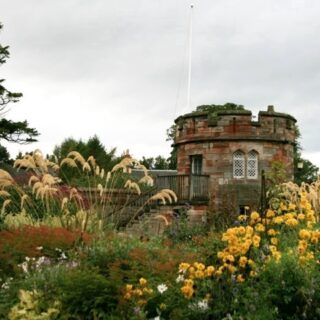
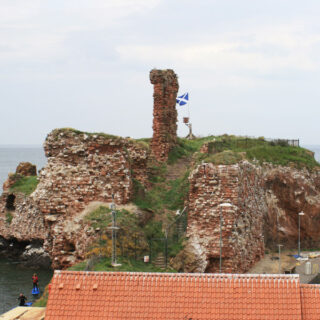
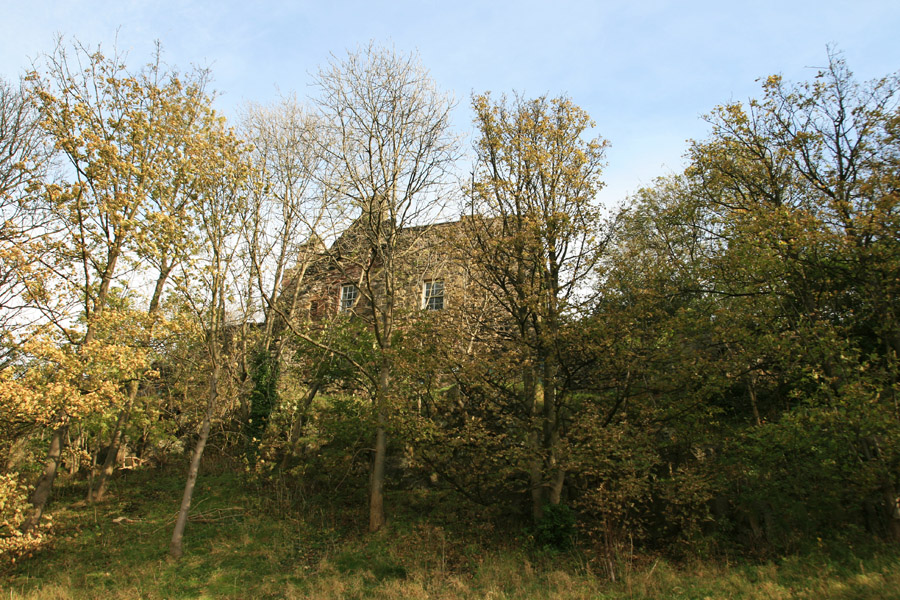
The remains of Lochend Castle, formerly Restalrig Castle, are incorporated into the side of the 19th century Lochend House.
Lochend was part of the lands of South Leith granted by David I to a Norman knight named De Lestalric in 1128, and the De Lestalric family built at castle at some point in the years that followed. The position is a naturally defensive one, occupying a rocky outcrop above a small loch.
In 1382, upon the death of Sir John De Lestalric, the property passed to his daughter, Katherine, who had married Sir Robert Logan of Restalrig, and so it became a Logan property.
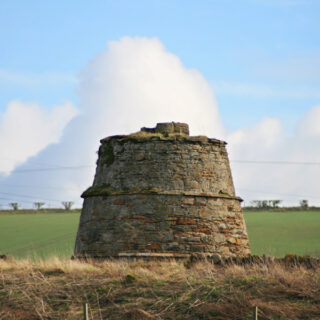
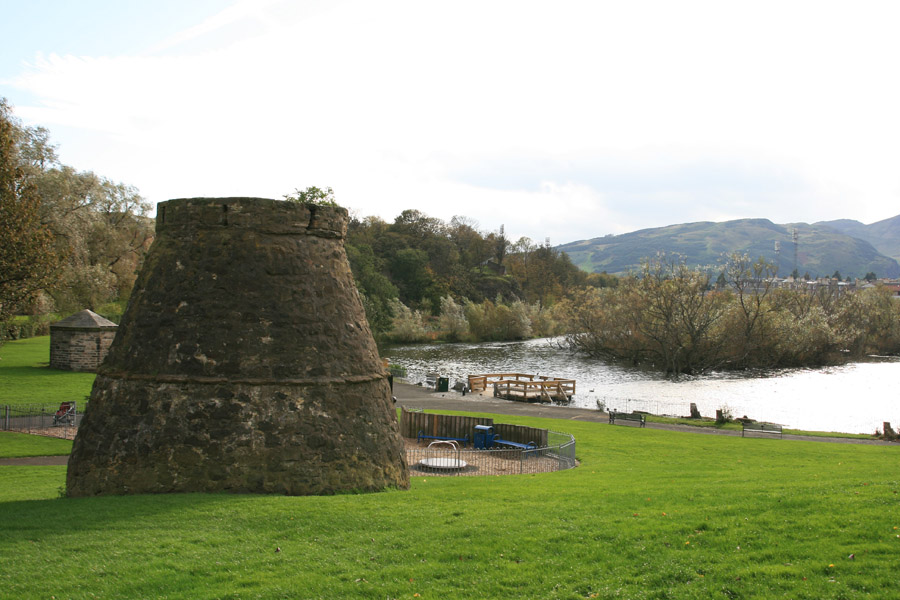
The castle is referred to as the “old tower” in 1495, but little information about it survives. At some point in the 16th century the old castle was replaced by, or incorporated into, a new castle, which had a vaulted basement. A doocot was built around the same time below the castle, just back from the edge of the loch. It is known that the doocot was built before 1560, as it appears on a map of the Siege of Leith in that year.
In 1573 another Sir Robert Logan was involved in holding Edinburgh Castle in the name of Mary Queen of Scots, which brought the Logans of Restalrig into conflict with the Establishment. In 1586 Lochend Castle was attacked and destroyed by the Provost of Edinburgh, William Little, as Logan wouldn’t allow the public to cross his land.
Logan ran into financial trouble, and was forced to sell off his estates. In 1596 he sold Nether Gogar to a relation, Andrew Logan of Coalfield. Involvement in the Gowrie Conspiracy of 1600 further exacerbated Logan’s problems, and Lochend Castle is said to have been burned at this time by William Gilmour of the Inch.
In 1602 he sold Fast Castle to Archibald Douglas, and in 1604 he split the barony of Restalrig and sold the Craigentinny part to James Nisbet and the remainder to James Elphinstone, the 1st Lord Balmerino.
Lord Balmerino fell from grace over letters sent to the Pope that he forged in the name of James VI. In 1608 the King granted many of Balmerino’s possessions, including Restalrig, Balmerino, Over Barnton, Ballumbie, Dunvegan and Lewis, to Alexander Drummond of Midhope.
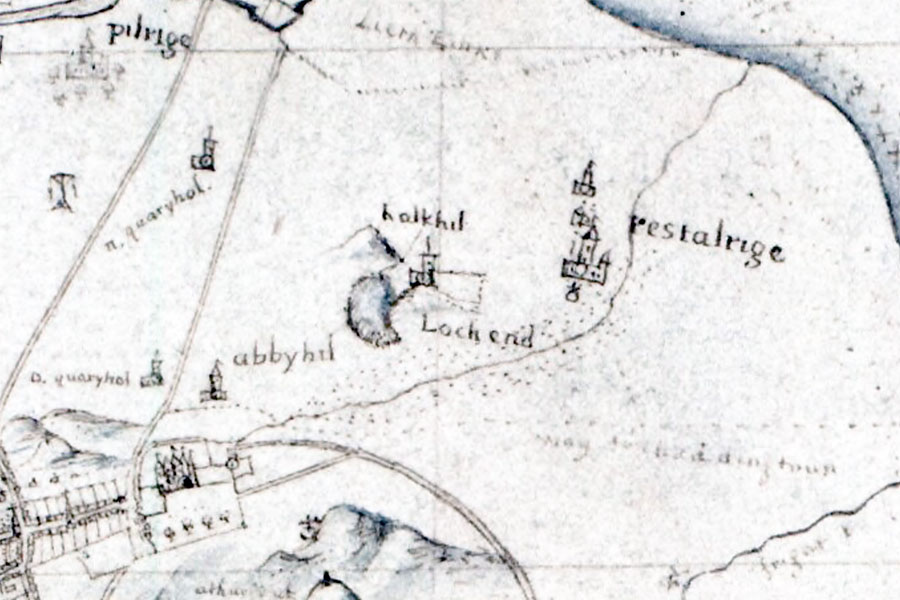
John Adair, c.1682map image courtesy of NLS
Restalrig, or Lochend Castle as it became know, returned to the Lords Balmerino as it was forfeited by Arthur Elphinstone, 6th Lord Balmerino, following his capture at Culloden fighting for the Jacobites. It then passed to Lord Murray, but in 1816 it was largely knocked down. Around 1820 a new house was built on the site, consisting of a two storey symmetrical villa.
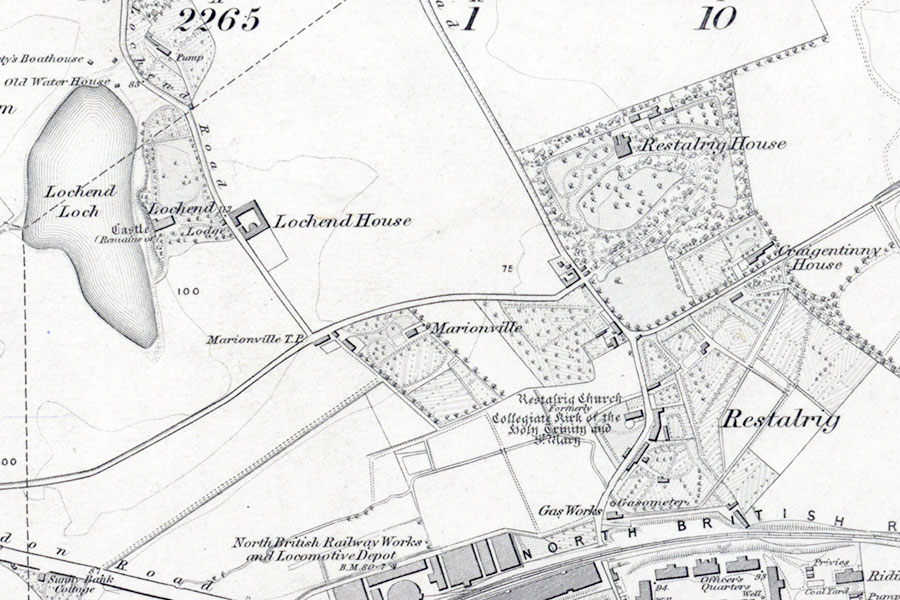
Ordnance Survey, 1853map image courtesy of NLS
A portion of the south elevation of the old castle was incorporated into the west side of the new building, the side perched on the rocky crags and overlooking the loch, and interestingly an old fireplace and a corbel can still be seen projecting from it.
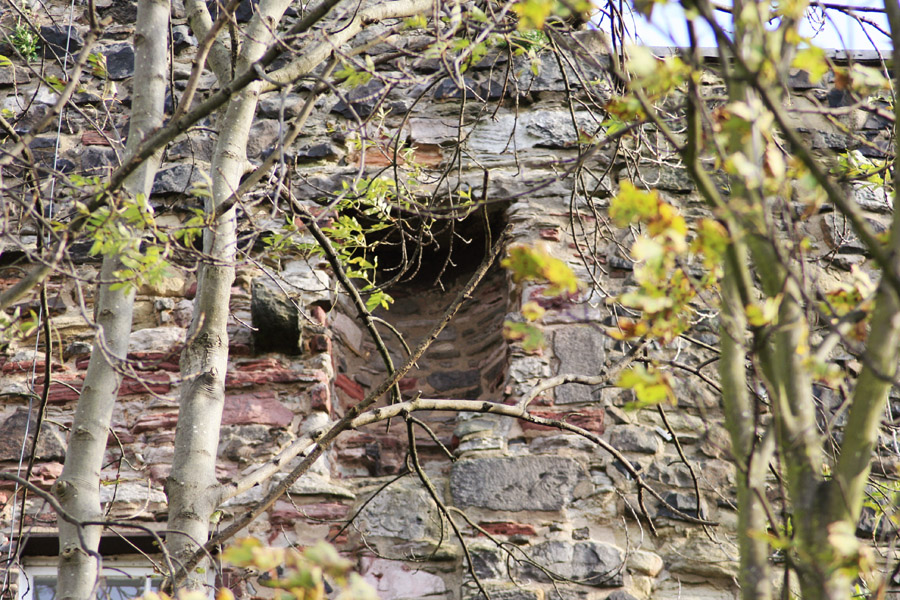
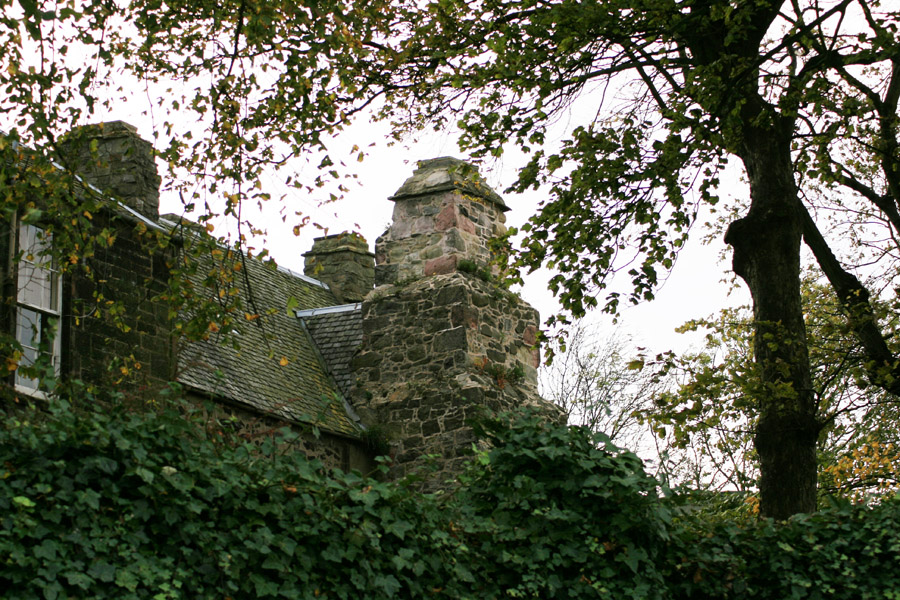
In the 1920s ownership of Lochend House passed from Lord Murray to Edinburgh Council, and it is now a children’s centre and nursery run by the City of Edinburgh Council.


Alternative names for Lochend Castle
Lestalryk; Lochend House; Rastalrig; Restalrig Castle; Restalrige
Where is Lochend Castle?
Lochend Castle is in the parish of Edinburgh and the county of Midlothian.
Grid reference:NT 27735 74754
Lat / long:55.96028,-3.159295